
If you’ve started looking into smart lighting, it’s likely you’ve had the same thought most people do at some point:
“Do I actually want to be talking to my lights… or just pressing a switch?”
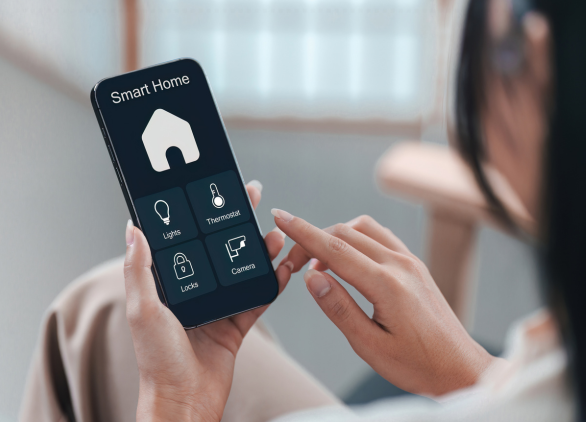

It’s a fair question. On paper, voice control sounds like the future. But when you’re standing in a dark room, hands full, or trying to turn everything off quickly before bed, what works in real life matters more than what sounds impressive.
We deal with this decision regularly across Leeds and the surrounding areas — especially in places like Alwoodley, Roundhay, and Harrogate where homeowners are investing properly in lighting upgrades.
The truth is, it’s not as simple as one being “better” than the other. It depends on how you live, how your home is set up, and what you expect from your lighting.
The Real Situation Most Homeowners Are In
In most cases, people come to us in one of these situations:
- They’re renovating and want to “do smart lighting properly”
- They’ve tried smart bulbs and apps and found them a bit frustrating
- They want convenience, but not something overly complicated
- They don’t want to lose the simplicity of a normal switch
And that last point is usually the key.
Because no matter how smart your home gets, you still need it to work simply.
What Voice Control Actually Looks Like in Practice
Voice control is usually what gets people interested in smart homes in the first place.
You can walk into a room and say:
“Turn on the kitchen lights”
“Set the lights to warm white”
“Dim the living room to 30%”
And it works — most of the time.
Where Voice Control Works Well
Voice control can be genuinely useful in the right situations:
Hands full (cooking, carrying things, etc.)
Accessibility needs (mobility or convenience)
Setting scenes (e.g. “movie mode”, “evening lighting”)
Whole-house commands (turn everything off at night)
In higher-end homes, it can feel quite seamless when set up properly.
Where It Falls Down
This is the part people don’t always think about.
You have to say the right thing, at the right time
It doesn’t always hear you (background noise, accents, etc.)
It can feel slow compared to pressing a button
It’s not ideal late at night or early morning
Guests often don’t know what to say
And the big one:
You’re relying on something that isn’t 100% instant or guaranteed.
That’s fine for some tasks — but for basic lighting, it can become frustrating.
Why Wall Control Still Matters (More Than People Expect)
Even in the most advanced smart homes we install, wall controls are still at the centre of everything.
Because they’re simple. Reliable. Immediate.
You press a button — the lights respond. Every time.
What Modern Wall Control Looks Like
We’re not talking about rows of standard switches anymore.
With systems like Lutron, Rako, and even more flexible setups using Shelly, wall controls can be:
- Clean, minimal keypads
- Custom engraved buttons (e.g. “Relax”, “Dining”, “All Off”)
- Multi-function (one button can control multiple lights or scenes)
- Dimming built-in
- Consistent across the whole house
So instead of 6–8 switches on a wall, you might have 2–3 well-labelled buttons that do exactly what you need.
Why Most People Prefer It Day-to-Day
In most homes we work on, once everything is installed, people naturally default to wall control.
Not because voice doesn’t work — but because this is easier:
- It’s instant
- Anyone can use it
- No learning curve
- No speaking required
- Works every time
It becomes second nature very quickly.
The Key Difference: Control vs Convenience
The best way to think about it is this:
- Wall control = primary control
- Voice control = added convenience
When people try to rely purely on voice, that’s when issues start creeping in.
But when voice is layered on top of a solid wall control system, it works much better.
What We Usually Recommend (Based on Real Installs)
If you’re renovating or upgrading lighting in Leeds, this is what we’d typically suggest:
Get the Wall Control Right First
This is the foundation.
We’d usually design:
- Clear, logical button layouts
- Scene-based lighting (not just individual switches)
- Consistency across rooms
This is what you’ll use 90% of the time.
Add Voice Control Where It Makes Sense
Then layer in voice control for:
- Bedrooms (hands-free convenience)
- Kitchens (when cooking)
- Whole-house commands
- Occasional use cases
This way, you’re not relying on it — but it’s there when you want it.
Avoid Overcomplicating It
One of the biggest mistakes we see is trying to do too much.
Too many scenes. Too many commands. Too many ways to control the same thing.
The best systems are the ones that feel simple.
A Common Example We See in Leeds Homes
Let’s say you’ve got an open-plan kitchen/living area.
With a well-designed wall control setup, you might have:
- “Cooking” – bright, functional lighting
- “Dining” – softer, focused lighting over the table
- “Relax” – warm, dimmed lighting for evenings
- “All Off” – everything off in one press
That’s all most people need.
Voice control then becomes optional:
- “Set relax mode”
- “Turn everything off”
It supports the system — it doesn’t replace it.
What About Smart Bulbs and App Control?
A quick note on this, because it often comes up.
If you’ve been using app-based smart bulbs, you’ve probably already noticed:
- Apps can be slow
- Switching things manually becomes awkward
- Family members don’t always use it properly
This is usually where people start looking for a more integrated setup.
Proper smart lighting systems (like the ones mentioned earlier) are designed to solve that — with wall control at the centre.
Reliability Matters More Than Features
This is something that only really becomes clear after living with a system.
Fancy features are great — but if your lighting doesn’t respond instantly and reliably, it quickly becomes annoying.
Wall controls are hardwired or professionally integrated, which makes them far more dependable than relying purely on wireless voice commands.
So… Which Is Best?
If we’re being honest:
Wall control wins for everyday use.
But that doesn’t mean voice control isn’t worth having.
The best setup is usually a combination of both — with wall control doing the heavy lifting, and voice control adding flexibility.
Is This Something You’re Considering?
If you’re in the middle of a renovation or planning a lighting upgrade in Leeds or nearby areas, it’s worth thinking about this early.
It’s much easier to design a system properly from the start than to try and retrofit something later.
We deal with this regularly — from simple upgrades to full smart home lighting setups — and we’ll always keep things practical and easy to use.
No overcomplicated systems. No unnecessary tech.
Just something that works the way you expect it to.
Need a Bit of Advice?
If you’re weighing this up or not sure what would suit your home, feel free to get in touch.
Happy to take a look at your plans, talk through options, or just give you a clear, honest view on what’s worth doing and what isn’t.
You can send over a photo, a floor plan, or just explain what you’re trying to achieve — and we’ll guide you from there. Get in touch today!