
You have bought an electric vehicle, the charging lead is in the boot, and there is a standard plug socket near the drive or garage. Plug it in overnight and it seems like an easy answer.
For a short while, it probably is.
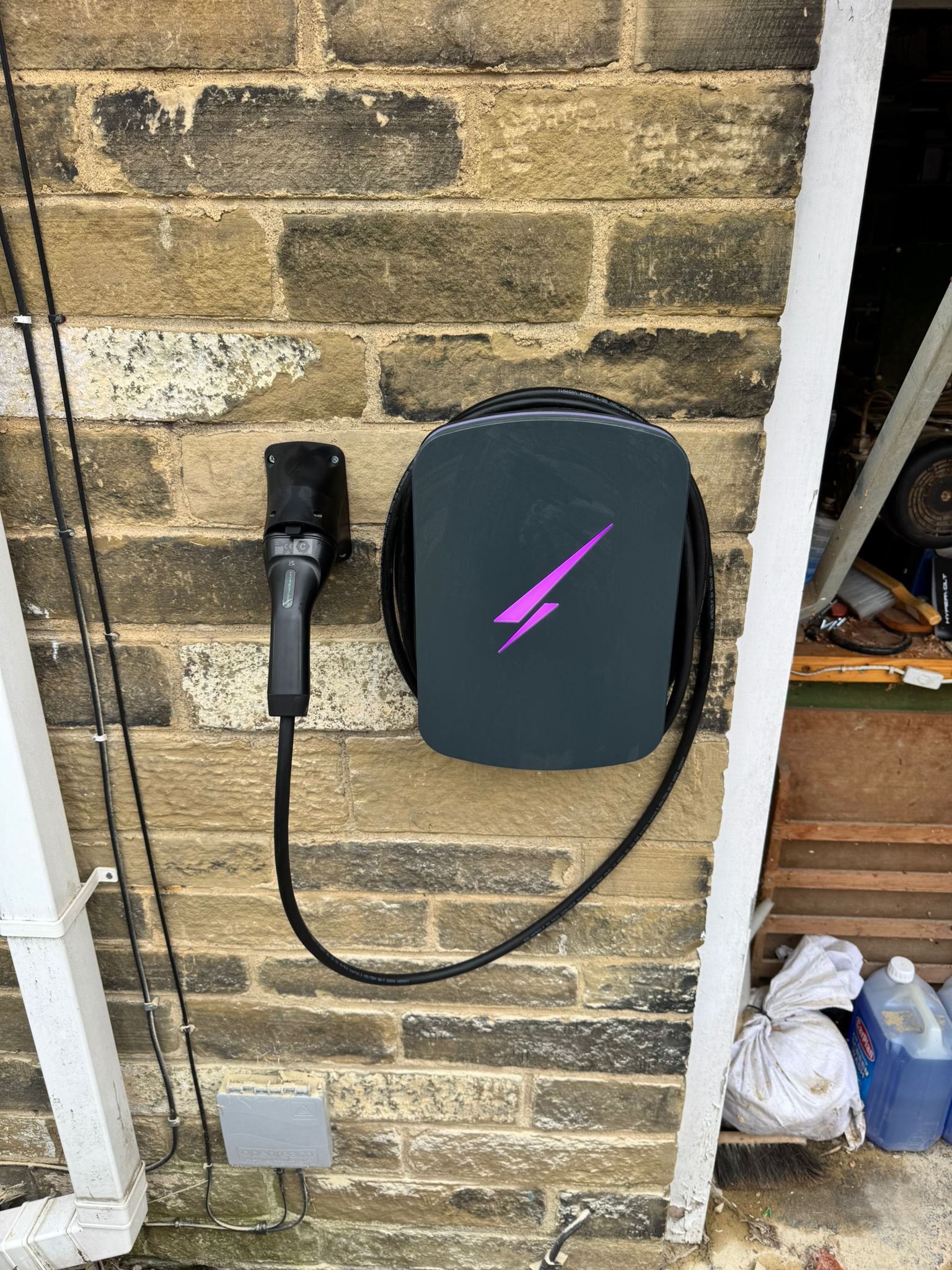
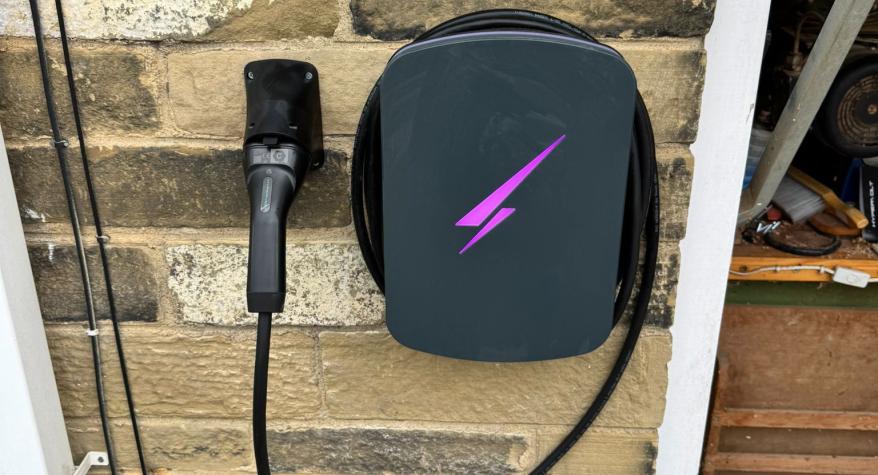
What many people call a “granny charger” can be useful when you are away from home, waiting for a proper charger to be installed, or simply need enough charge to get through the next day. The problem starts when that temporary arrangement becomes the everyday plan.
A standard three-pin socket was not designed with the expectation that it would supply a heavy electrical load for hours at a time, night after night. In most cases, a proper home EV charger installation is the safer, more reliable and more practical option.
For homeowners in Leeds, particularly those with older electrics, recent extensions, electric showers, induction hobs or plans for more than one EV, it is worth getting the installation assessed properly before relying on a plug-in lead long term.
What is a granny charger?
A granny charger is the informal name for the portable charging lead supplied with many electric cars. It normally plugs into a standard 13-amp socket at one end and into the vehicle at the other.
Technically, this is usually known as Mode 2 charging. It is a lower-power way of charging and is often limited to around 10 amps or below. That makes it slower than a dedicated home chargepoint, but it can still run for a long period while the car is charging.
There is nothing automatically wrong with using the manufacturer-supplied lead occasionally. It can be a useful back-up. It is likely that most EV owners will use one at some point.
The issue is repeated use through an ordinary socket that has not been checked for EV charging. A socket may look perfectly fine from the outside, but the condition of the terminals, cabling, connections and circuit behind it matters just as much.
Why daily EV charging from a general socket can become a problem
A normal socket circuit is usually shared with other parts of the home. It may also supply lights, appliances, garage equipment, garden equipment or other sockets around the property.
When an EV is plugged in, that circuit can be under steady demand for many hours. That is very different from occasionally running a vacuum cleaner, phone charger or television.
In an older property, or where there are worn accessories, poor connections or alterations that have been added over the years, that prolonged load can expose weaknesses that were already there.
This does not mean every socket will overheat or fail. But it does mean the socket and circuit should not be assumed to be suitable just because the plug fits.
A proper electrician will consider things such as:
- The condition and age of the existing electrical installation
- Whether the socket circuit has suitable RCD protection
- What else is connected to that circuit
- Whether the socket itself is suitable for repeated EV charging
- The condition of the consumer unit
Whether the home has enough electrical capacity for an EV charger alongside normal household demand
Current electrical guidance recognises that EV charging places particular demands on an installation. Mode 2 charging through a standard socket needs suitable protection, while dedicated Mode 3 home chargers are normally installed on their own circuit.
The false economy of relying on a granny charger
The electricity itself is not automatically more expensive just because you are using a granny charger. Your energy supplier charges for the electricity you use, not simply the type of lead plugged into the car.
The possible false economy is elsewhere.
Using a general socket as your permanent EV charging point can mean putting long-term stress on an older socket, shared circuit or consumer unit. If a connection starts to degrade, the eventual repair may involve replacing accessories, tracing faults, upgrading the circuit and then installing the proper charger anyway.
There is also the practical side.
A standard plug-in charger is slow. That may be manageable for a small daily commute, but it becomes frustrating when you need to recover more range overnight, have a larger battery, start using the car more often or add a second electric vehicle to the household.
A dedicated EV charger gives you a more reliable charging routine. You arrive home, plug in, and know the vehicle should be ready when you need it.
It can also make it easier to make use of off-peak electricity tariffs, depending on your vehicle, charger and energy supplier. Smart chargepoints are now a normal part of home EV charging and are designed to support controlled charging at lower-demand times.
Never rely on extension leads or adaptors
This is the part where we would be clear.
Do not run a granny charger through an extension lead, multiway adaptor or cable reel as a regular charging arrangement.
It may seem harmless when the car is parked just a few metres away, but EV charging is a sustained load. Adding extra plugs, connections and cable joins creates more potential weak points.
The best way to deal with this is to have a proper chargepoint installed in a sensible location near where the vehicle is parked. That avoids trailing cables through garages, across paths or through windows, and gives the installation the protection and testing it needs.
If you have no off-street parking, do not run a cable across the pavement. Aside from the obvious trip risk, there may be local permissions and suitable cross-pavement solutions to consider.
What should a proper EV charger installation include?
A good EV charger installation in Leeds is not just a case of fitting a unit to the outside wall and connecting it to the nearest available circuit.
It starts with an assessment of the property.
A check of your existing electrical installation
Before fitting anything, the electrician should look at your consumer unit, incoming supply, earthing arrangement and likely electrical demand in the home.
This matters even more if you already have high-demand equipment such as an electric shower, hot tub, air conditioning, induction cooking, electric heating, a garden room or solar panels.
In some cases, the existing consumer unit is perfectly suitable. In others, there may be no spare way available, the board may be dated, or upgrades may be needed before the charger can be fitted safely.
That is not a reason to panic. It is simply part of designing the job properly.
A dedicated circuit for the charger
A proper home EV charger is normally supplied by its own dedicated circuit, rather than being added to a general socket circuit. This gives the charger its own cable, protective device and clear means of isolation.
It also means the installation can be designed around the charger’s load, cable route and location rather than trying to make an existing socket do a job it was never intended to do every day. Dedicated-circuit charging is the standard arrangement for domestic Mode 3 chargepoints.
Correct protection and earthing arrangements
EV charging requires specific consideration around electric shock protection, fault protection and earthing.
You do not need to understand the technical details as a homeowner. What matters is that the electrician does.
The right solution will depend on the property’s supply type, the charger selected and the existing installation. This may involve suitable RCD or RCBO protection, DC fault protection where required, and protection against certain supply faults.
This is one of the main reasons a proper EV charger installation should not be treated like fitting an outdoor socket.
Safe cable routes and a sensible charger location
The charger needs to be placed where it is easy to use, but not where the cable will regularly become a trip hazard, get trapped in a gate or door, or be stretched across a walkway.
A good installer will discuss where you park now, whether that may change, how long the charging lead is, and whether you may own a different vehicle in future.
We would usually recommend thinking ahead here. It can be much cheaper and neater to choose the right location and cable route from the start than to move the charger later.
Testing, certification and notification
Once installed, the work should be tested and certified.
You should expect an Electrical Installation Certificate for a new EV charging circuit. Depending on the nature of the work, Building Regulations notification may also be required. A registered electrician can normally self-certify applicable domestic work through their competent person scheme rather than leaving you to arrange this yourself.
Keep the paperwork somewhere safe. It is useful for your own records, future electrical work, house sales and insurance queries.
What should you look for when choosing an EV charger electrician?
Not every electrician carries out EV charging work regularly, and this is not the job to choose purely on the lowest quote.
Here is what to look for.
- They are properly registered
Ask whether the electrician is registered with a government-approved competent person scheme, such as NAPIT or NICEIC.
Registration gives you reassurance that the contractor has been assessed for relevant electrical work and can deal with certification and notification where required.
Electrical Safety First advises homeowners to check that their electrician is registered with a government-approved scheme.
- They are insured
Ask about public liability insurance. A reputable electrician should have suitable cover in place for the work they carry out.
This should not feel awkward to ask. It is a basic part of choosing someone to work on your home. Electrical Safety First recommends checking that an electrician has public liability insurance of at least £2 million.
- They are qualified and understand EV charging
A qualified electrician is essential, but EV charging also needs specific knowledge of load assessment, earthing, protective devices, charger compatibility and current requirements.
Ask whether they install EV chargers regularly and whether they will inspect the consumer unit and supply before confirming the final design.
Be cautious of anyone offering to fit a charger without asking sensible questions about the property, consumer unit, parking arrangement or vehicle.
- They provide a clear written quote
A decent quote should explain what is included.
That may cover the charger itself, cable length, protective devices, any consumer unit work, testing, certification, making good and whether there are likely extra costs if the installation is more complex than expected.
You should know what you are paying for before work starts.
EV charger installation in Leeds
At Smart Ohm, we deal with electrical upgrades and home installations across Leeds. We take the time to assess the existing installation before recommending a charger, rather than treating every property as the same.
As a NAPIT-registered, TrustMark Approved business and Which? Trusted Trader, we provide clear advice, suitable certification and an honest assessment of what your home needs. Smart Ohm also states that it carries £5 million public liability insurance.
A granny charger can be useful in an emergency. But for regular home charging, a properly installed EV charger is usually the safer and simpler long-term answer.
If you are currently charging your EV from a general socket, or you are planning to buy an electric car soon, get in touch. Happy to take a look and advise on the most practical EV charger installation for your home in Leeds.